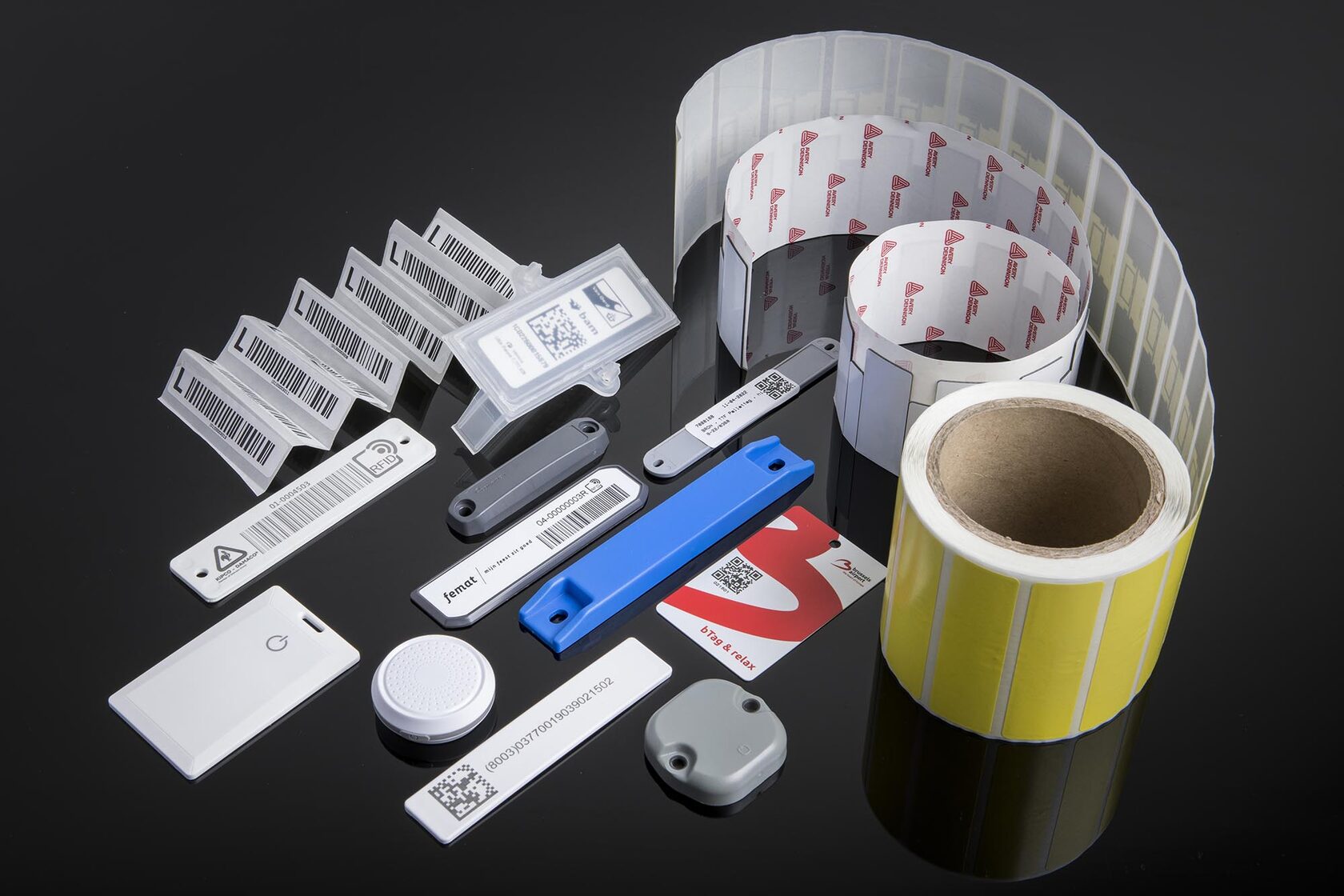
Metal requires a tag designed for that surface
Metal reflects and redistributes the electromagnetic field around an RFID tag. A standard inlay tuned in free space can lose performance when mounted directly on a conductive surface.
An on-metal tag includes a structure that uses or isolates the metal surface so the tag operates in a predictable way. The result still depends on the asset, mounting position, orientation and reader zone.
Select the tag and the mounting method together, then compare candidates on the actual objects before ordering the full batch.
Why a standard tag behaves differently
The metal object becomes part of the RF system and affects the tag antenna.
Field reflection
Metal reflects and redistributes electromagnetic waves around the asset.
Detuning
The electrical behavior of the tag antenna changes when it is mounted directly on the surface.
Object geometry
Edges, curves, holes and nearby parts create a different field pattern.
Orientation
Performance depends on tag orientation relative to the reader antenna and direction of movement.
Tag constructions used on metal
Choose the form factor for the asset, attachment method and operating environment.
Printable on-metal label
A dedicated layer separates the antenna from the surface. Useful for printing, serial encoding and compact placement.
Flag tag
The active part is folded away from the object. Used on foil packaging and small metal surfaces.
Rugged hard tag
The antenna and chip are protected by a housing. It can be attached with industrial adhesive, screws or rivets.
Embedded tag
Installed in a prepared recess or component and tested in the final asset geometry.
Define these parameters before selection
The label “on-metal” does not mean every such tag works equally well on every metal asset.
- Asset material, dimensions, curvature and available mounting area.
- Required read zone: handheld search, gate, cabinet, bench or conveyor.
- Minimum working distance and allowed reads from adjacent zones.
- Tag orientation relative to reader antennas and movement direction.
- Attachment method: adhesive, screws, rivets or embedding.
- Temperature, moisture, chemicals, impact, abrasion and outdoor exposure.
- Printing, EPC encoding, TID use and verification workflow.
- Acceptance test with several tagged objects, not one isolated sample.
Assets commonly tagged with on-metal RFID
The identifier is designed to operate directly on a metal asset, container or component.
Tools and fixtures
Control completeness, issue and presence in a work area.
IT equipment
Servers, computers, racks and infrastructure components.
Returnable containers
Metal bins, kegs, cylinders and transport units.
Medical and laboratory assets
Devices and equipment included in regular inventory.
Production assets
Machines, assemblies, molds, parts and maintenance kits.
Vehicle components
Parts and assemblies moving through service and repair processes.
How to compare several tags
- Describe the operation
Define the asset, read zone, distance, movement and acceptance criterion.
- Select candidates
Choose several constructions and sizes intended for metal.
- Use the final mounting method
Apply the planned adhesive, screw, rivet or recess and keep the position repeatable.
- Use production hardware
Test with the reader, antenna, power and geometry planned for operation.
- Repeat orientations
Check the expected and difficult angles for handheld and fixed zones.
- Test a representative group
Use several tagged assets and realistic spacing, not one tag in isolation.
- Record the result
Save read consistency, working zone, false reads and physical observations.
- Approve the specification
Fix the tag model, mounting position, encoding and acceptance method before purchase.
Metal and liquids require different solutions
Both affect UHF RFID performance, but through different RF mechanisms.
Metal surfaces
Reflect and redistribute the field. Use an on-metal construction, a controlled mounting position and a verified orientation.
Liquids and wet goods
Absorb energy and alter antenna tuning. Validate tag placement, packaging and read-zone geometry separately.
RFID on metal questions
Can a standard RFID label work with a spacer?
Sometimes a controlled distance from metal improves a standard tag, but the result depends on spacer material and thickness, asset geometry and attachment. Compare this construction with a dedicated on-metal tag under the same test.
Can RFID read through a metal wall?
Metal shields radio communication. The reader and the active side of the tag must share a designed read zone. A tag inside a closed metal enclosure requires a dedicated mounting point or RF window.
What determines an on-metal tag read range?
Tag construction and size, the asset, mounting position, orientation, reader power and antenna, frequency band and environment. Use catalog range only for shortlisting before a site test.
Can on-metal tags be printed and encoded?
Yes. Printable on-metal labels and printers for thicker media are available. Verify tag-printer compatibility and encoding settings before ordering the full batch.
Technical basis: official GS1, Impinj and Zebra materials on RFID around metal and tag selection.
GS1: metal and water · Impinj: how RAIN RFID works · Zebra: RFID tag types