Technical guide · Kazakhstan
How to choose and validate a laundry UHF RFID tag before ordering
Validate the complete operating cycle, not only catalog read range: attachment, washing, drying, ironing, chemicals, bulk reading and transfer of the identifier to the accounting system.
Short answer
Acceptance is built around the process, not one specification
ISO/IEC 18000-63 describes the air interface of a passive UHF RFID system, but it does not prove that a particular tag will survive your processing cycle. Before a bulk order, sew the sample in its final position, run the agreed cycles and test it at the same read points and load configurations used in production.
Scope
A laundry tag is not an ordinary apparel label
A retail RFID label can identify apparel in manufacturing and retail. A laundry tag remains attached during repeated processing, so its enclosure, attachment and full operating cycle require separate validation.
Retail apparel label
Its primary role is item identification in the supply chain. Care processes may be outside its declared scope.
Laundry tag
Its primary role is repeated tracking of linen or workwear through issue, collection, washing and return.
Shared requirement
A unique identifier must remain linked to one item record in the accounting system.
Technical specification
What to define before selecting samples
Items and circulation
Linen or workwear type, item count, processing frequency and points of responsibility.
Complete cycle
Temperature, duration, extraction, drying, ironing, chemicals and mechanical load in the actual process.
Attachment method
Seam, pocket or another method; final tag position and orientation.
Read zones
Desk, handheld, gate, tunnel, bag or cart; the operating speed of each process.
Textile state
Dry, wet, folded, tightly packed and mixed with other items.
Data model
EPC encoding rule, item record, owner, cycle, status and movement history.
Test protocol
Five stages before a bulk order
Incoming inspection
Record the sample model, batch, appearance, identifier and baseline read.
Final attachment
Install the tag with the same method and in the same position planned for production.
Processing cycle
Run the agreed number of complete cycles under actual processing conditions.
Operational reading
Test real load configurations and read points: item, stack, bag, cart, gate or handheld.
Decision record
Document results, exceptions, damage, equipment configuration and the batch decision.
Acceptance matrix
Agree criteria before testing begins
| Parameter | How to test | What to record |
|---|---|---|
| Identifier | Repeated read of every sample | EPC, no substitution and linkage to the item record |
| Attachment | Inspection after each control stage | Displacement, seam damage and enclosure condition |
| Bulk reading | Production-sized load in the actual container | Configuration, correctly read and missed identifiers |
| Adjacent zones | Check at normal power settings | Unwanted reads outside the agreed zone |
| Integration | Transfer the event to software | Item, status, time, location and operation result |
Data architecture
The tag carries the identifier; the system carries the history
For most projects, a unique EPC on the tag is sufficient. The database stores the item record, owner, category, status, processing count and movement history. This model lets business data change without rewriting the complete record to the tag.
Form factor
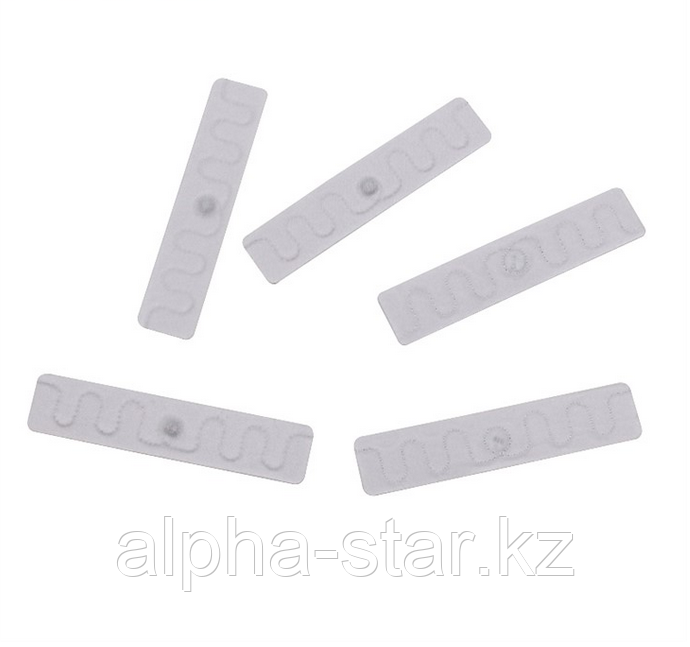
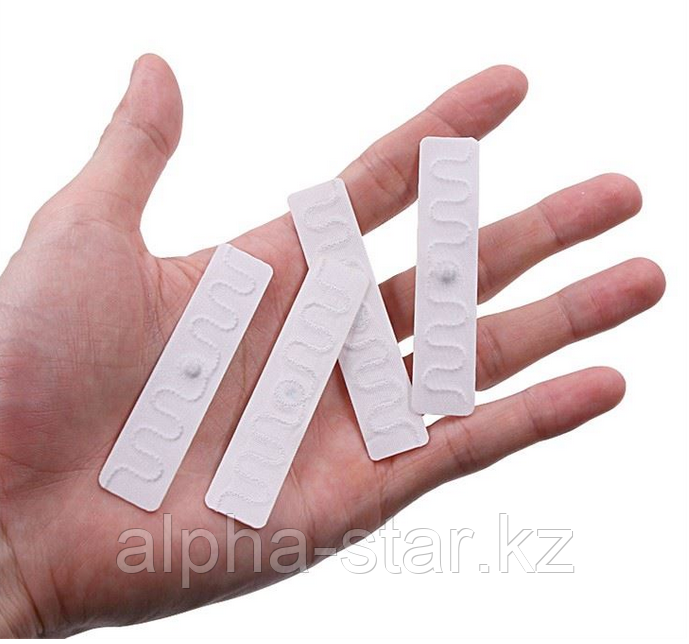
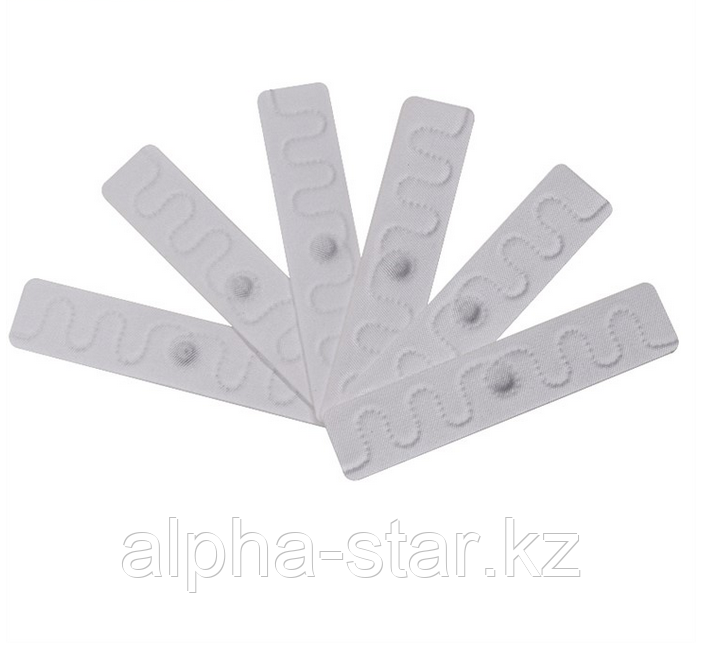
Example of a flexible textile UHF RFID tag
The photographs show one available form factor. They do not replace the manufacturer specification or a validation protocol for the supplied batch.
Verifiable sources
What this guide is based on
FAQ
Common questions
Is an ISO 18000-6C statement in a product listing sufficient?
No. It is a preliminary air-interface compatibility signal. Processing resistance, attachment and operational reads must be confirmed by specification and validation.
Can a tag be selected only by the stated wash-cycle count?
No. Processing conditions, chemicals, drying, ironing, attachment and the item state during reading also matter.
Should wet textiles be tested?
Yes, when the process reads items before they are fully dry. Validate the actual state used in operation.
What data should be written to the tag?
Usually a unique EPC linked to the item record in software. The remaining data is held in the accounting system.
When should the main batch be ordered?
After the sample is approved and a successful protocol reproduces the complete operating cycle.
Next step
Validate samples on your textiles and process
Describe the items, processing cycle, attachment method and read points. We will prepare a comparative validation plan before the bulk order.
